Wood Cut Prints
Carving light from shadow — observational scenes reduced to their essential silhouettes in woodblock and linocut.
Woodblock and linocut on paper — hand-carved, inked, and pulled.
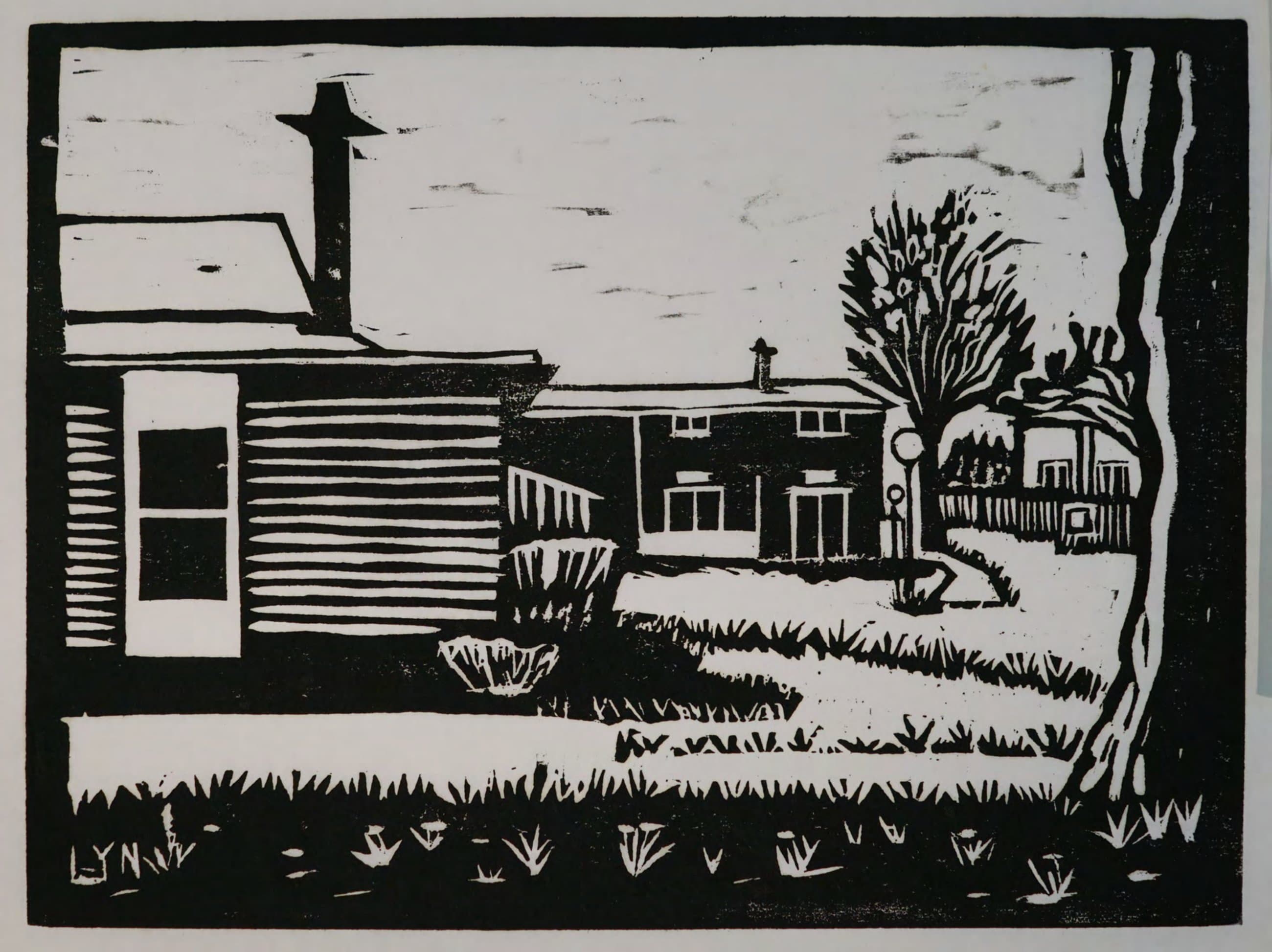
Wood cut and linocut printmaking force a radical reduction. There is no colour, no gradient, no undo — just the block, the knife, and the decision of what to keep as black and what to carve away into light. Working this way sharpened how I handle contrast, negative space, and visual hierarchy in every piece of design I make.
No colour, no gradient, no undo
Printmaking is where my practice meets discipline. A finished print begins with a single block and a drawing that must survive being reduced to pure black and pure white — there's no room for hedging with a midtone or blending an edge. Every line that appears on the final paper had to be planned on the block, then carved in reverse, then inked and pulled under pressure.
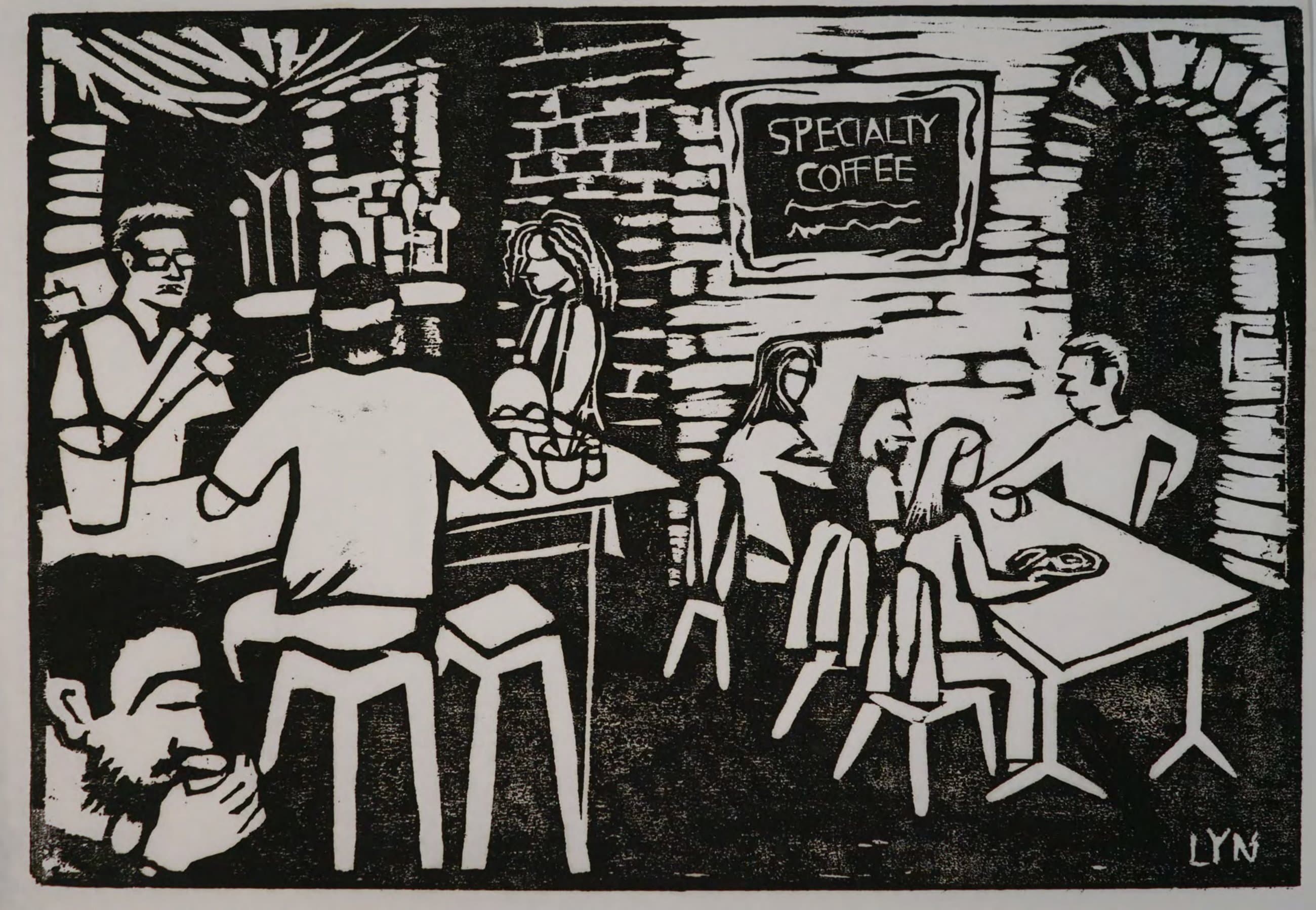
The café scene was the most ambitious composition — multiple figures, overlapping architecture, a hand-lettered sign, and varied textures. Cutting it meant thinking about hierarchy at the level of the silhouette: who reads first, what recedes, which textures stay loud and which quiet down into dense black.
Trusting the edge
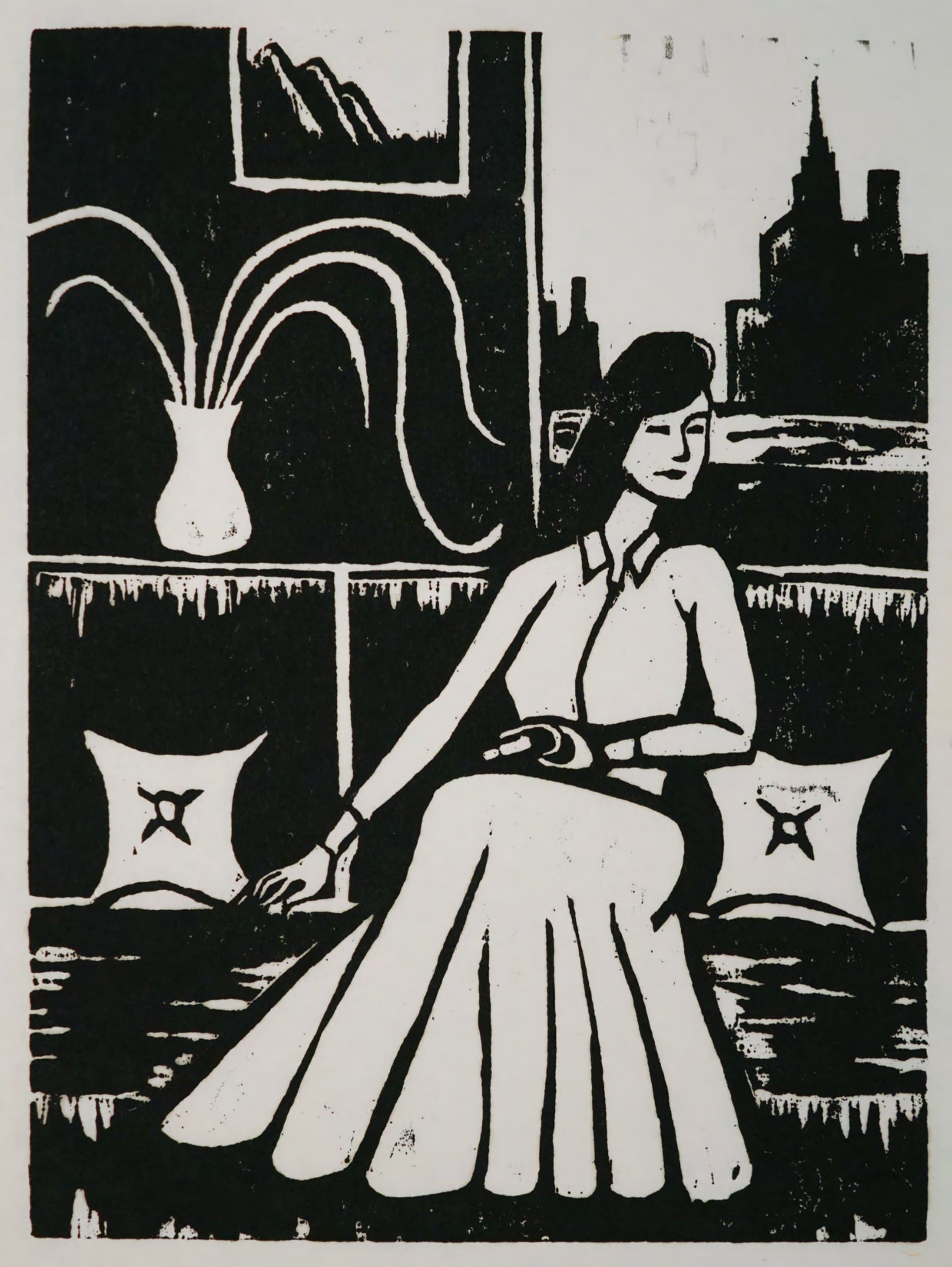
The seated figure is the most minimal of the group. A few long cuts describe the dress and hair; the city outside the window is only suggested. It was an exercise in trusting the edge — knowing when to stop carving.
Depth without shading
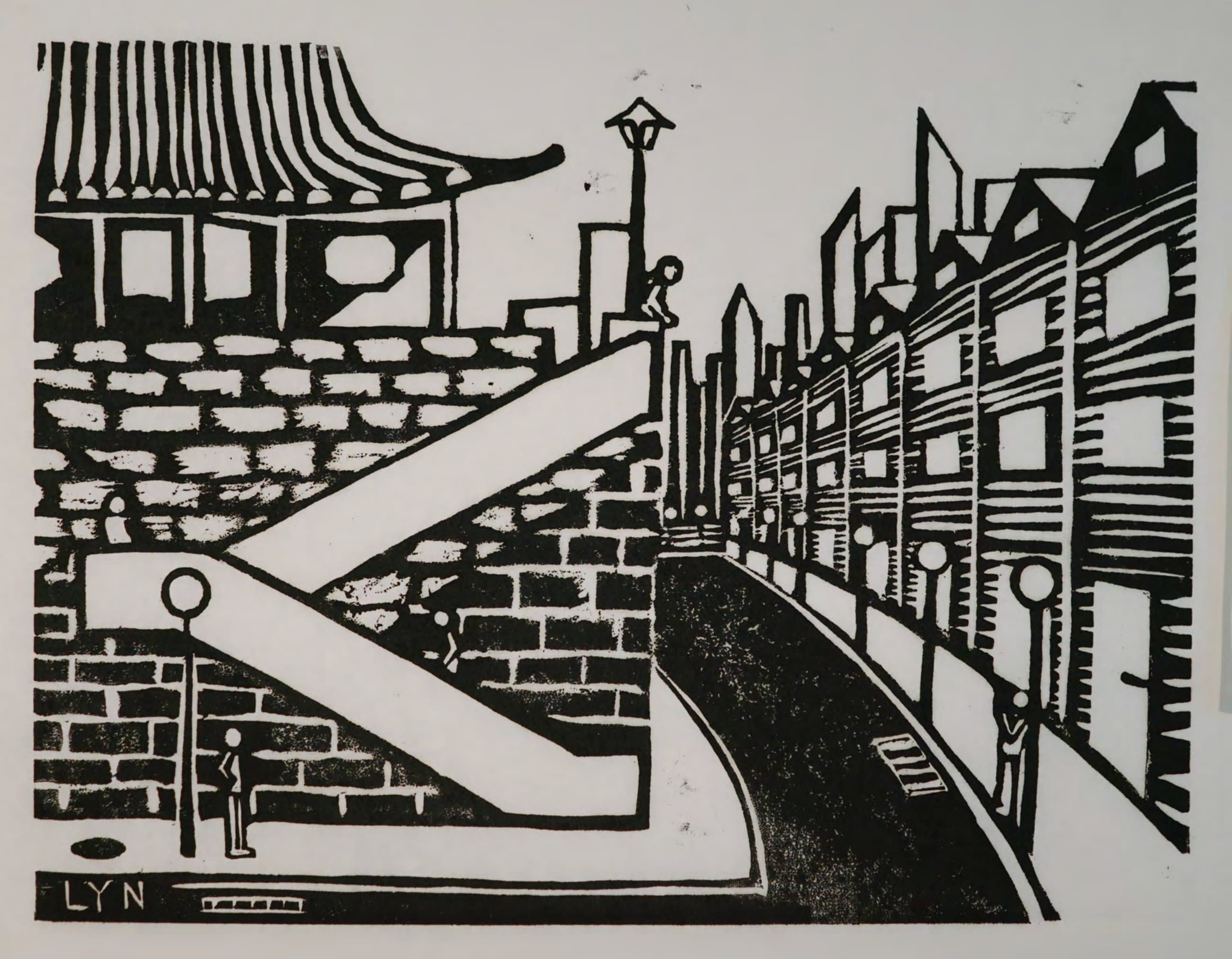
The street perspective print uses a single strong diagonal and a repeated brick pattern to pull the eye down the block. Nothing in the image is shaded — depth is entirely a matter of line weight and negative space.
The same muscles as logo and poster work
Printmaking trains the same muscles I use in logo and poster design: reduction, contrast, legibility at a glance. It also taught me patience — each print is at least half planning before any tool touches wood.